How to Progress as a Coin Collector: Building Focus and Expertise
The Moment Everything Changes
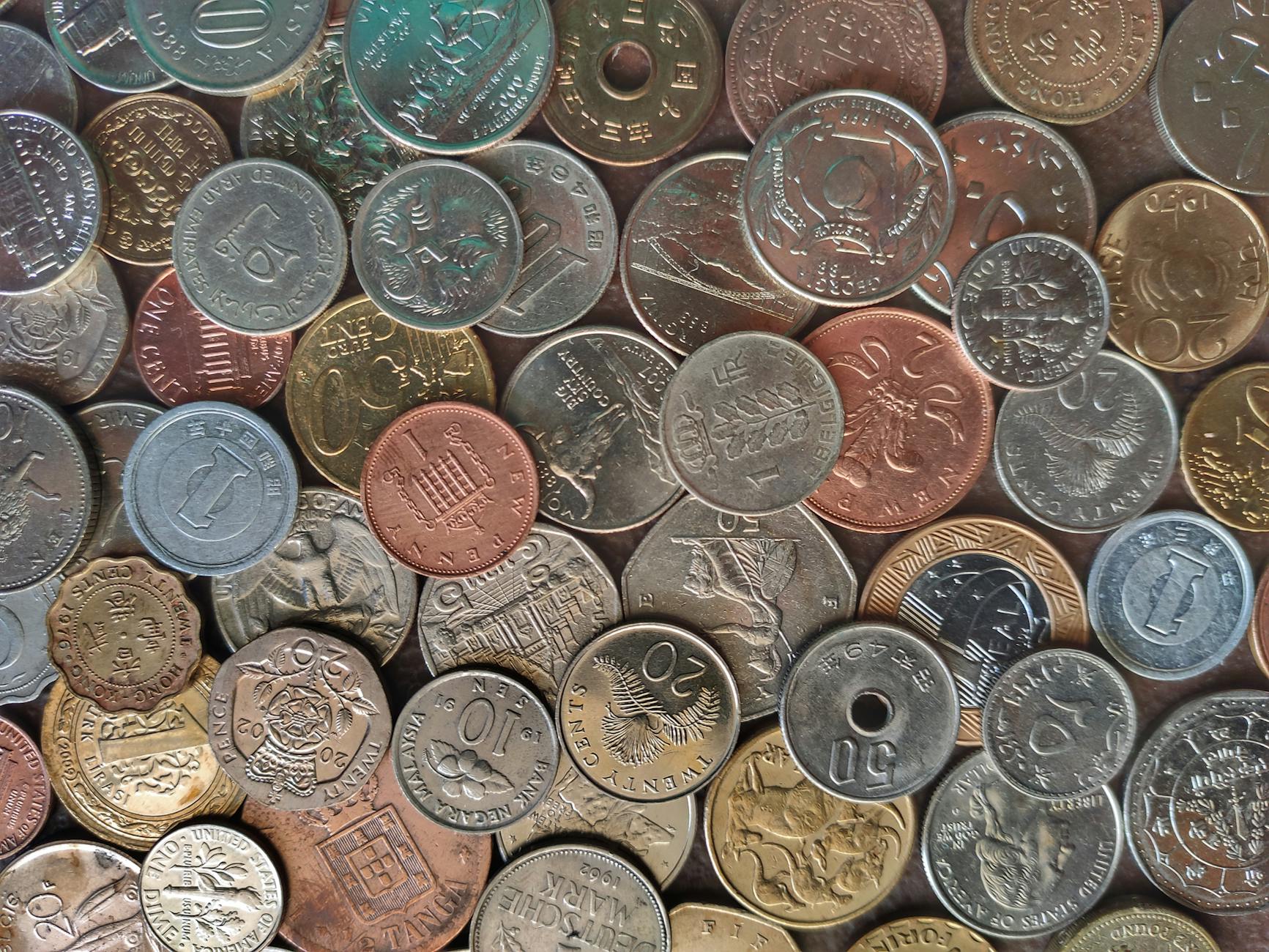
Most coin collectors can point to a single moment when a casual interest became something more serious. For many it happens quietly – you are sorting through your grandfather’s old tobacco tin, or emptying a jar of loose change before a holiday, and suddenly a coin stops you cold. It might be a florin from 1937, or a pre-decimal sixpence worn smooth by decades of handling, or perhaps a 50p with a design you have never noticed before. Whatever it is, something shifts. The coins in your pocket are no longer just money. They are objects with histories, with stories pressed into metal.
That shift is the beginning of real collecting. But knowing where to go from there – how to build focus, develop knowledge, and actually progress – is something most beginners struggle with. The hobby can feel enormous at first. British coinage alone spans more than a thousand years of minting history, from the pennies of King Offa of Mercia through to the commemorative 50ps issued by the Royal Mint last year. It is easy to buy a few interesting pieces and then stall, unsure what you are actually collecting or why.
This guide is about getting past that stall. It is about building a focused, satisfying collection that grows with your knowledge and gives you a genuine sense of progression.
Stop Collecting Everything – Start Collecting Something
The single most common mistake beginners make is trying to collect everything that looks interesting. It is completely understandable. You come across a Victorian penny, a Churchill crown, a millennium 50p, and a lovely George VI shilling all in the same week, and they all appeal for different reasons. You buy them all. Then you do the same the following week, and the week after that.
Within a few months you have a collection that is wide, shallow, and deeply difficult to value, catalogue, or expand with any sense of direction. Worse, you have no clear idea what the gaps are, because there is no defined shape to what you are building.
Choosing a focus is the most important early decision you will make as a collector. It does not have to be final – many collectors shift focus as their tastes mature – but having one transforms your hobby from passive accumulation into active pursuit. That pursuit is where the real pleasure lives.
Some popular and very manageable collecting focuses for UK beginners include:
- Decimal 50p coins – The 50p is the most actively collected circulating coin in Britain. The range of reverse designs issued since 1969, combined with the fact that many can still be found in everyday change, makes it an accessible starting point with a clear, finite set to complete.
- Pre-decimal pennies by monarch – Collecting one example of each monarch’s penny from Victoria through to Elizabeth II gives you a beautiful historical sweep without requiring enormous investment.
- Maundy money – Issued annually by the sovereign to pensioners at a Church of England service, Maundy coins are among the most ceremonially significant in British history. Sets appear regularly at auction and specialist dealers.
- Error coins – Mis-strikes, doubled dies, and off-centre strikes from the Royal Mint are rare but genuinely exciting, and hunting for them is a hobby within a hobby.
- Coins of a specific reign – Focusing on, say, all denominations issued under George V creates a satisfying set with well-documented varieties and reasonable availability.
- Regional tokens – Eighteenth and nineteenth century trade tokens, many minted for specific towns and businesses, are a wonderfully local and underrated area of British numismatics.
Choose something that genuinely interests you rather than something that sounds impressive. The collector who builds a complete, well-researched set of Kew Gardens 50ps – understanding every year of issue and every mint mark – knows far more, and is far more satisfied, than the one who has a drawer full of miscellaneous rarities with no connecting thread.
Learning the Language of Coins
Every specialist hobby has its own vocabulary, and coin collecting is no exception. Learning to speak the language properly is not pedantry – it is genuinely practical, because it helps you accurately describe what you have, understand what you are reading in catalogues, and avoid costly misunderstandings when buying or selling.
A few terms are worth learning early:
- Obverse and reverse – The front (heads) and back (tails) of a coin. In British coinage, the obverse traditionally carries the monarch’s portrait.
- Legend – The text inscribed around the edge or face of a coin.
- Field – The flat, background area of a coin that carries no design.
- Die – The metal stamp used to strike coins. Varieties often arise from different dies being used for the same coin type.
- Grading – The condition of a coin, typically expressed on a scale from Poor (P) through Fair, Fine (F), Very Fine (VF), Extremely Fine (EF), and Uncirculated (UNC). Professional grading services such as NGC and PCGS assign numerical grades (1-70) on their encapsulated slabs.
- Proof – A specially produced coin struck on polished blanks using specially prepared dies, intended for collectors rather than circulation. Proof coins have mirror-like fields and frosted design elements.
- Mintage – The total number of examples of a coin struck in a given year. Lower mintages generally, though not always, mean higher values.
There is a free online glossary maintained by the British Numismatic Society, and the Royal Mint Museum’s website carries a great deal of accessible introductory material. Spend an hour with a decent reference book – Ken Bressett’s A Guide Book of English Coins and the annual Coins Market Values published by Token Publishing are both excellent starting points – and the terminology will quickly become second nature.
Building Knowledge Before Spending Money
There is a standing joke among experienced collectors that every beginner’s first dozen purchases are their most expensive education. You buy a coin described as “rare” on an online auction, pay over the odds, and later discover it is common as muck. You acquire a supposedly Uncirculated Victorian shilling that turns out to have been cleaned with a metal polish, reducing its collector value to almost nothing. You fill your collection with circulated examples of coins that would have been worth collecting at a much higher grade.
None of this is the end of the world – it is simply how most collectors learn. But you can compress that education considerably by investing time in knowledge before investing money in coins.
Join the British Numismatic Society or the Royal Numismatic Society before you spend a significant sum on anything. Both organisations offer access to journals, libraries, and members with decades of experience who are, in the main, genuinely happy to help beginners. The British Association of Numismatic Societies (BANS) maintains a directory of local clubs across the UK – from the Yorkshire Numismatic Society to the Midland Coin Fair regular meetings in Warwickshire. These local groups are invaluable. Sitting across a table from someone who has been collecting Edwardian coins for thirty years, handling their duplicates, and listening to their stories, teaches you things no book can.
Online communities are also useful. The Coin Talk forum has an active UK section, and there is a well-moderated British coins subreddit where beginners can post photographs for identification help and valuation guidance. Be cautious about taking valuations too seriously from anonymous internet strangers, but identification help is generally reliable.
Where to Buy Coins in the UK
Once you have a clear focus and basic knowledge, you are ready to buy with confidence. There are several routes available to UK collectors, each with different advantages and risks.
Specialist dealers are the safest starting point. Look for members of the British Numismatic Trade Association (BNTA), whose members adhere to a code of conduct and offer a degree of buyer protection. Dealers such as Spink & Son in London’s St James’s (one of the oldest coin dealers in the world, established in 1666), A.H. Baldwin & Sons, and Timothy Millett Ltd are well-regarded. Reputable dealers will accurately grade their coins and stand behind their descriptions. You will pay a premium over auction prices, but you are paying for knowledge, accuracy, and peace of mind.
Specialist auctions – Spink, Dix Noonan Webb, and Morton & Eden all hold regular numismatic sales in London. These are where serious collectors buy, and where genuinely rare material tends to surface. Auction catalogues are themselves educational documents: read them carefully, study the photographs, and attend viewing days even if you do not intend to bid. The Midland Coin Fair, held at the National Motorcycle Museum near Birmingham, is one of the largest UK coin fairs and a superb place to browse, learn, and meet dealers in person.
Online marketplaces carry significant risk for the uninitiated. eBay has a vast selection of UK coins but also a substantial volume of mis-described, over-graded, and outright fake material. If you buy from eBay, do so only from sellers with extensive positive feedback specifically for coin sales, and never pay significant sums until
you have developed a reasonable level of knowledge. Specialist auction sites such as Baldwins, Dix Noonan Webb, and Noonans conduct sales entirely online as well as in person, and these are generally far safer environments in which to bid, with professional cataloguing and condition guarantees that eBay sellers simply cannot match.
Coin fairs, auctions, and reputable dealers remain the foundation of responsible collecting, but do not overlook the British Numismatic Trade Association (BNTA) directory when sourcing material. Members of the BNTA are bound by a code of conduct, which offers you a meaningful degree of protection should a dispute arise. When buying in person, always handle coins carefully by their edges, ask questions freely, and do not feel pressured into a purchase. A good dealer will welcome your questions and will not object to you taking time to consider a piece. Keep records of every purchase — the date, the price paid, the source, and any provenance information provided — as this documentation adds value to your collection and simplifies matters considerably if you ever decide to sell.
Storage and preservation deserve equal attention. Coins should be housed in inert, archival-quality flips or capsules, never in PVC-based holders, which leach chemicals that cause permanent surface damage over time. Keep your collection away from damp, humidity, and direct sunlight, and resist the temptation to clean coins yourself. A cleaned coin is almost always worth less than an uncleaned one in comparable original condition, and the damage is irreversible. If conservation is genuinely necessary, consult a professional conservator rather than attempting any treatment yourself.
In conclusion, progressing as a coin collector is less a matter of spending power than of patience, education, and discernment. Read widely, buy carefully, join your local numismatic society, and allow your collection to develop with purpose rather than impulse. The collectors who derive the most satisfaction from the hobby — and who build the most coherent, valuable collections — are invariably those who took the time to understand what they were collecting before they spent heavily. There is no shortcut to expertise, but the process of acquiring it is, for most collectors, the most rewarding part of the pursuit.
https://shorturl.fm/Bek0f
https://shorturl.fm/lWZod
https://shorturl.fm/CJQpz
https://shorturl.fm/senen
https://shorturl.fm/SBt0e
https://shorturl.fm/A3QCM
https://shorturl.fm/rM8ED
https://shorturl.fm/pZhhB
https://shorturl.fm/bjGr3
https://shorturl.fm/i10Gn
https://shorturl.fm/NI3bw
https://shorturl.fm/fdjvp
https://shorturl.fm/QYGIo
https://shorturl.fm/JbAZE
https://shorturl.fm/d2UnJ
https://shorturl.fm/J7PuS