British Coins: A History from the Penny to the Pound
There are few hobbies that connect you so directly to British history as coin collecting. Hold a Victorian penny in your hand and you are touching the same object that a factory worker in Manchester, a fisherman in Cornwall, or a shopkeeper in Edinburgh once pulled from their pocket. That physical link to the past is part of what makes numismatics – the study and collection of coins – so compelling for so many people across the UK.
Whether you have stumbled across a jar of old coins in your grandparents’ attic, spotted something unusual in your change, or simply want a hobby that rewards patience and curiosity, British coin collecting is an excellent place to start. This guide will walk you through the history of British coinage, help you understand what makes a coin valuable, and give you the practical knowledge to begin your own collection with confidence.
A Brief History of British Coinage
Britain’s coinage story stretches back well over two thousand years. The earliest coins found on British soil were struck by Celtic tribes before the Roman invasion – small, roughly shaped pieces of gold and silver bearing abstract designs that bear little resemblance to the neat, precise coins we know today. When the Romans arrived in 43 AD, they brought with them a sophisticated monetary system, and Roman coins circulated widely across Britannia for nearly four centuries.
After the Romans withdrew, Anglo-Saxon kingdoms developed their own coinage. The silver penny became the backbone of English commerce from around the seventh century onwards, and it remained astonishingly resilient – the penny persisted, in one form or another, all the way until decimalisation in 1971. Think about that for a moment: a coin denomination surviving for over a thousand years.
The Norman Conquest brought greater standardisation. William the Conqueror insisted on tight control of the mint system, and English coins became more uniform in quality. Through the medieval period, the range of denominations expanded – the groat (four pence), the shilling, the crown, the half-crown – and gold coins such as the noble and the sovereign entered circulation. The sovereign, first struck in 1489 under Henry VII, remains in production today, making it one of the longest-running coin designs in the world.
The introduction of milled coinage in the seventeenth century was a turning point for quality. Before milling, coins were hand-struck and clipping – shaving small amounts of silver from the edges – was rampant. The new machine-struck coins with milled edges made clipping obvious and fraud far harder. Charles II’s reign saw beautiful milled silver coins produced at the Tower of London mint, and collectors prize these pieces highly today.
Decimalisation on 15th February 1971 – Decimal Day – transformed British coinage entirely. Out went the old system of pounds, shillings, and pence (where 12 pennies made a shilling and 20 shillings made a pound), and in came the clean, base-ten system we use today. Many people were baffled at first, but decimalisation opened up a wonderful collecting opportunity: the pre-decimal coinage that flooded into charity boxes and biscuit tins across the country is now a rich source of collectible material.
Understanding What Makes a British Coin Valuable
Not every old coin is worth a fortune, and understanding the factors that drive value will save you from disappointment – and help you spot genuine bargains.
Condition is perhaps the single most important factor. Collectors use a grading system to describe a coin’s state of preservation. A coin graded as “Uncirculated” or “Mint State” has never been used in everyday commerce and retains its original lustre. At the other end of the scale, a “Poor” grade means the coin is heavily worn and barely identifiable. Most coins you encounter at car boot sales or in old collections will fall somewhere in the middle – Fine, Very Fine, or Extremely Fine – and the difference in value between grades can be enormous.
Rarity matters enormously too. Mintage figures – the number of coins struck in a given year – are publicly available for most modern British coins, and a low mintage generally signals higher collector demand. Some years produce dramatically fewer coins than others, often because production was halted partway through or a new design replaced an old one mid-year.
Historical significance adds another layer of interest. Coins featuring monarchs who reigned briefly, or designs that were quickly withdrawn, tend to attract premium prices. Edward VIII coins are a classic example: he abdicated before his coins entered general circulation, so genuine Edward VIII coins are exceptionally rare and valuable.
Errors and varieties can also make a coin far more desirable than its face value suggests. The 2p coin struck with “New Pence” rather than “Two Pence” on the reverse – produced in small numbers in 1983 – is a famous example of a minting error that turned an everyday coin into a collector’s prize.
Coin Grades at a Glance
| Grade | Abbreviation | Description | Typical Condition | Collector Appeal |
|---|---|---|---|---|
| Mint State / Uncirculated | MS / UNC | Never used in circulation | Full lustre, no wear | Very High |
| Extremely Fine | EF | Very light wear on highest points only | Sharp detail, slight surface marks | High |
| Very Fine | VF | Moderate wear, all major details clear | Good definition, visible legends | Moderate to High |
| Fine | F | Even wear across the whole coin | Main features clear, finer detail lost | Moderate |
| Poor / Fair | P / Fr | Heavy wear, barely identifiable | Outline visible, little detail | Low (except rarities) |
Where to Start Your Collection
The good news for beginners is that you do not need to spend a lot of money to get started. Your own spare change is an entirely legitimate starting point. Since the Royal Mint regularly issues new commemorative designs for circulation – from the 50p celebrating everything from Paddington Bear to the NHS – keeping an eye on your change costs nothing and can yield genuinely interesting finds.
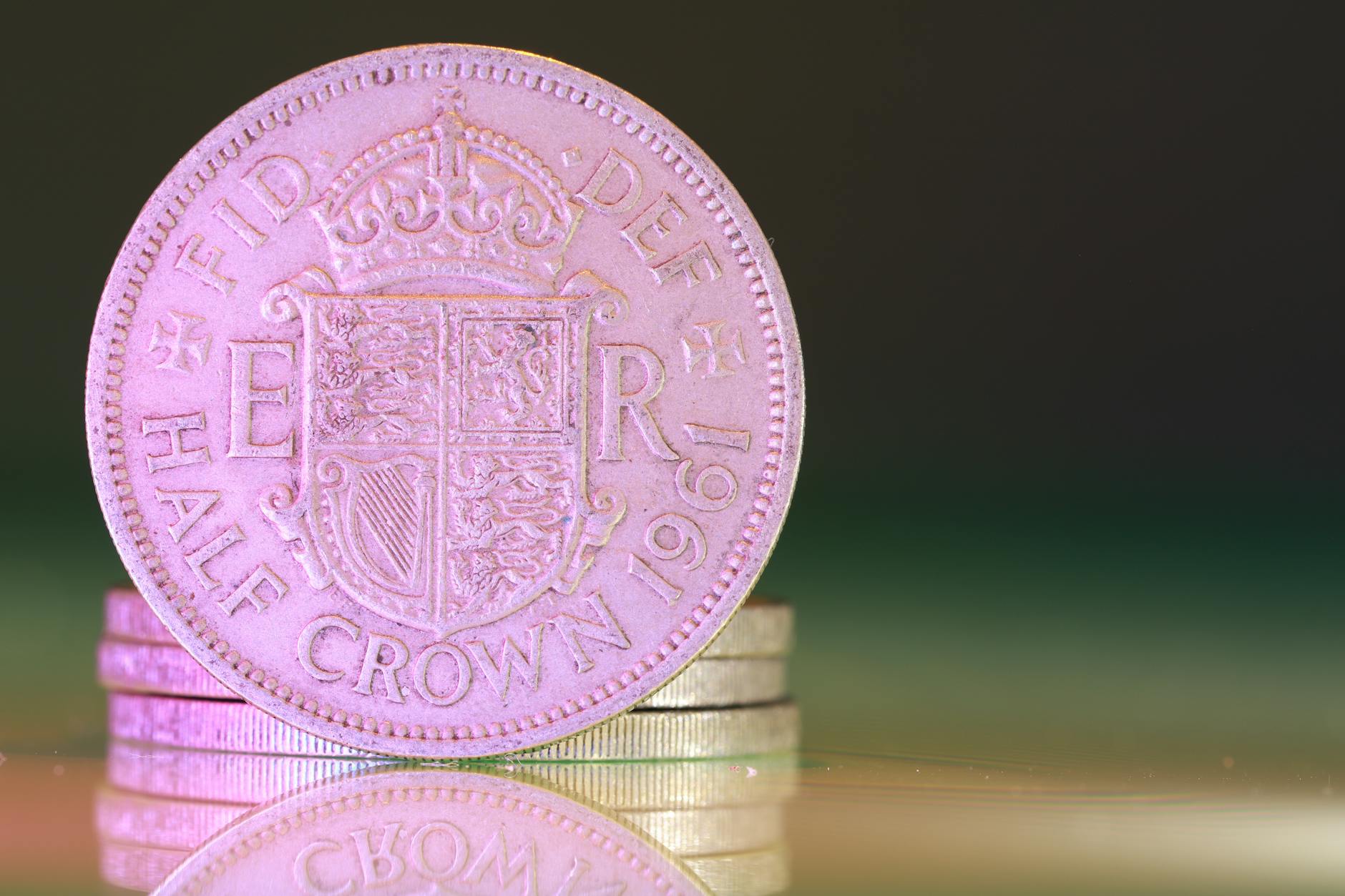
Pre-decimal coins are another excellent entry point. Sixpences, threepenny bits, florins, and half-crowns can be bought very cheaply at antique fairs, car boot sales, and online marketplaces. A sixpence in circulated condition might cost you as little as 50p to a pound. That is an affordable way to handle genuine silver (pre-1947 British silver coins contain 50% silver; pre-1920 coins contain 92.5% sterling silver) and build a feel for what different grades look like in the hand.
Once you are ready to spend a little more, specialist dealers are invaluable. The British Numismatic Trade Association (BNTA) maintains a list of reputable dealers across the country. Coin fairs, such as those organised by the British Numismatic Society and the London Coin Fair held at the Holiday Inn Bloomsbury, are excellent places to meet knowledgeable dealers, examine coins properly before buying, and ask questions without pressure. The Coinex fair held annually in London is one of the largest in Europe and well worth a visit.
Online, you will find a huge range of material on platforms such as eBay, but exercise caution. Always check a seller’s feedback, ask for additional photographs, and be sceptical of coins described as “rare” without clear evidence. Reputable online dealers, including Spink & Son (founded in London in 1666 and still trading), A.H. Baldwin & Sons, and Chard in Blackpool, offer greater security and reliable grading.
Practical Steps for Getting Started
- Decide on a focus. Trying to collect everything at once is overwhelming and expensive. Consider specialising – perhaps decimal 50p coins, Victorian pennies, pre-decimal silver, or coins from a particular monarch’s reign. A focused collection is more satisfying and easier to manage.
- Get a basic reference book. Coin Year Book, published annually by Token Publishing in Devon, is the standard UK reference guide. It lists mintage figures, current market values, and grading guidance. It is available from most coin dealers and costs around £15-£20.
- Buy proper storage from the outset. Coins stored loose in a tin or bag will knock against each other and pick up scratches that reduce their grade and value. Invest in coin albums with clear pockets, individual coin capsules, or coin trays lined with acid-free material. Avoid PVC-based holders as they can cause a green slime to develop on coins over time.
- Never clean your coins. This cannot be stressed strongly enough. Cleaning a coin – even gently – almost always damages the surface and destroys value. Collectors and dealers can spot a cleaned coin immediately, and it will be worth significantly less than an uncleaned coin in the same grade. Leave coins exactly as you find them.
- Keep records. Note where you acquired each coin, what you paid for it, and any relevant details about its history. A simple spreadsheet works perfectly. This information is useful for insurance purposes and adds to the story of your collection.
- Join a coin club. The British Numismatic Society and the Royal Numismatic Society both welcome members of all experience levels. Local coin clubs – there are dozens across England, Scotland, Wales, and Northern Ireland – meet regularly, organise talks, and offer a friendly community where beginners can learn from experienced collectors without feeling out of their depth.
- Be patient. The best collections are built over years, not months. Buy the best quality you can afford at each step, resist impulse purchases at inflated prices, and take time to learn before committing serious money to any single piece.
Notable British Coins Worth Knowing
As you develop your interest, certain coins will crop up repeatedly in conversation and reading. Familiarising yourself with a handful of landmark pieces will help you understand what experienced collectors are talking about.
The 1933 penny is perhaps the most famous rarity in British numismatics. Only seven were struck
, as proofs for archival purposes, since no pennies were required for circulation that year. None are available to collectors — they reside in institutions and church foundations — making them more legend than acquirable rarity. Knowing they exist is part of the culture of collecting; chasing one is not a realistic ambition.
The 1887 Gothic Crown, the florin of 1849 (nicknamed the “Godless florin” for its omission of the usual Dei Gratia inscription), and the 1952 halfcrown each represent moments where design, politics, or timing produced something out of the ordinary. The florin is particularly instructive: its controversy led to the designer, William Wyon’s successor Richard Yeo, having the inscription restored within a year, making it a coin that tells a precise constitutional and religious story in a single small detail. These are the pieces that reward research — their value is inseparable from their context.
The error coins and mule strikes of the 20th century also attract considerable attention. A mule is produced when dies intended for different denominations or dates are paired in error, and several British examples — including certain 1953 sets — have become well-documented collector pieces. They are not always visually dramatic, but understanding why they are significant separates the knowledgeable collector from the casual buyer.
Conclusion
British coinage offers an unbroken material record stretching back over a thousand years. Each coin in a collection is a small piece of manufactured history — a physical object that passed through the hands of people who lived through events that are now studied in books. Building even a modest collection with genuine care and knowledge is a worthwhile undertaking, and one that tends to deepen rather than exhaust itself over time. The more you learn, the more interesting each subsequent acquisition becomes, and the more critically you are able to assess what is genuinely scarce, genuinely beautiful, and genuinely worth your attention.